More Information
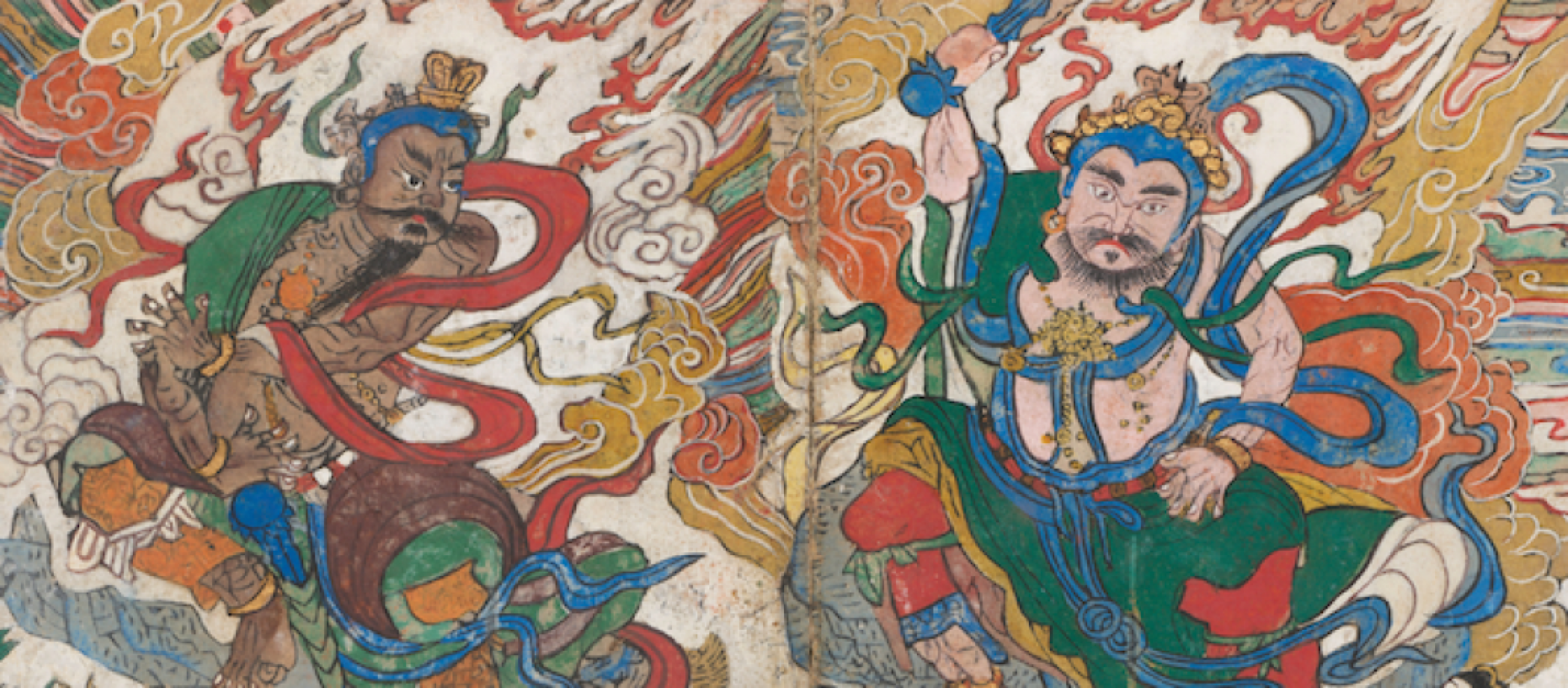
Turning the pages of centuries-old books and examining Ming manuscripts up close reveals details that digital study alone cannot fully capture. UCLA Library recently co-hosted a program that put these materials directly into librarians’ hands, helping them look beyond the written text to discover what an object itself can tell us about the era it came from, an approach they can carry into their own classrooms and communities.
“Training the Trainers: Materiality of Ming Books and Manuscripts,” presented by UCLA Library, The Claremont Colleges and Columbia University, began with a 12-part virtual public series in May. Scholars from North America and China explored the detective work of rare book authentication alongside advances in papermaking, woodblock carving and multicolor printing. The series drew 1,450 attendees from 16 countries and regions.
In-person workshops in August built on that foundation. Rare books specialists guided participants in working directly with original materials, equipping librarians to identify, interpret and teach with Ming works“.
Library instruction increasingly emphasizes object-based learning, asking students to see books not only as vessels of text, but as material artifacts that reveal how they were made, circulated, used and collected,” said Su Chen, head of the Richard C. Rudolph East Asian Library (EAL).
"Hands-on study of Ming books and manuscripts offers insights no digital surrogate can fully replicate.”
UCLA Library was ideally suited to host the program. The East Asian Library and Library Special Collections hold nearly 100 Ming books and manuscripts. Many were acquired as part of a teaching collection developed by Rudolph, the EAL’s namesake, and Man-Hing Mok, its first head librarian, and gifts from UCLA history professor Yu-Shan Han and collector Julian C. Wright.
Chen developed the program with Xiuying Zou, head of the Asian Library at The Claremont Colleges, and Dr. Chengzhi Wang, Chinese studies librarian at Columbia University’s C.V. Starr East Asian Library. All three saw the benefit of pairing online and in-person primary-source teaching. “This collaboration reflects what librarians do best,” Chen said. “We connect people with information, bring dispersed resources and expertise together, and create opportunities for knowledge to be shared.”
The initiative was made possible in part through support from the James P. Geiss and Margaret Y. Hsu Foundation and the Ju-Yen & Linnar Teng Initiative of the Global Knowledge Initiative. “The UCLA Library’s proposal advanced the foundation’s mission to encourage research and interpretation of the Ming dynasty (1368–1644) in China in creative ways,” said Pauline Yu, a board member of the James P. Geiss and Margaret Y. Hsu Foundation. “Not only did it introduce the extraordinary resources of the Richard C. Rudolph East Asian Library and UCLA Special Collections, as well as scholarship about the history and material culture of Ming books, to a broad audience, but it also provided vital professional development for librarians elsewhere to enable them to support object-based teaching and research about the Ming across the disciplines.”
Through hands-on learning and global collaboration, UCLA Library is helping preserve centuries of knowledge while preparing the next generation of librarians, scholars and educators. Give to UCLA Library(opens in a new tab) to support programs that connect people with rare collections and expand access to cultural heritage.