Using the Collection
Digitized materials in the Student Activism Collection can be accessed online via the UCLA Library Digital Collections platform. Portions of the collection are unprocessed. Audiovisual and audio materials are unavailable for access. Please contact UCLA Library Special Collections at AskLSC@library.ucla.edu for more information.
More Information
About the Collection
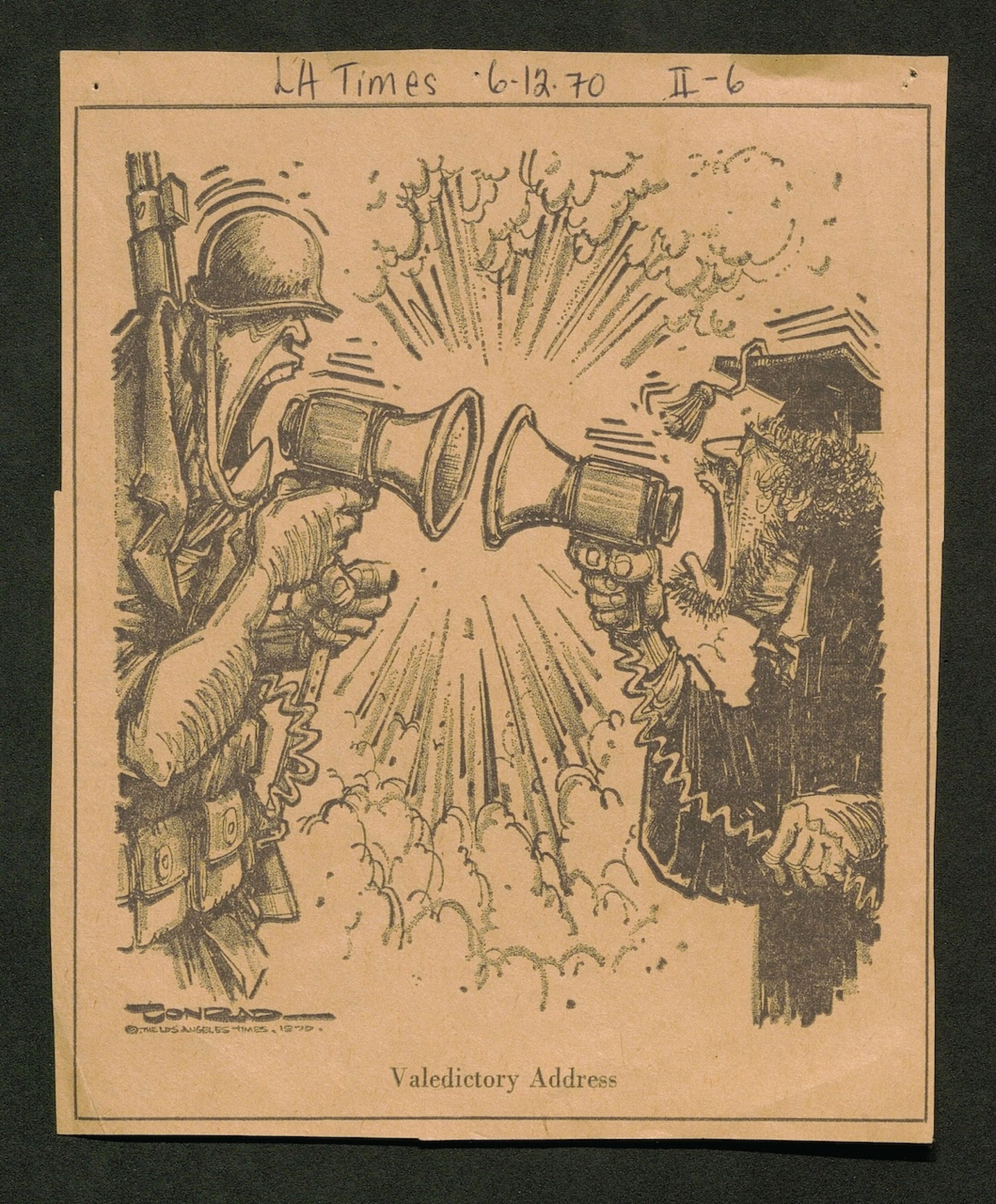
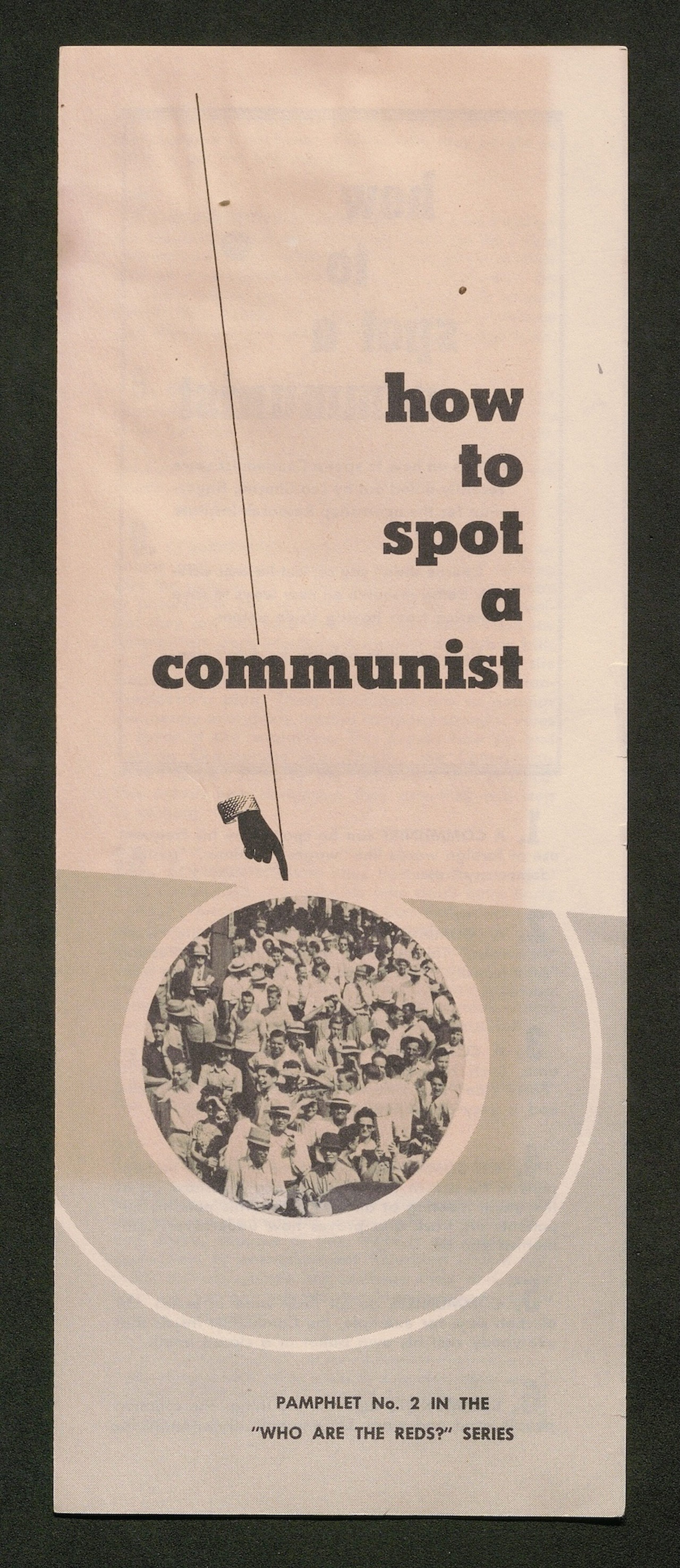
Record Series 259 contains materials related to student activism at UCLA from 1927 to 2014. Files contain materials generated by, or intended for, UCLA students. Subjects include but are not limited to free speech, communism, pacifism, socialism, freedom of the press, resale of books/student book store, parking on campus, WWII, racial discrimination, Jim Crow, affordable housing, job security, the Loyalty Oath controversy, the Korean War, McCarthyism, the Rosenberg trial, the visit of the Shah of Iran to UCLA, the Civil Rights Movement, desegregation, Selma, the Vietnam War, draft resistance, labor rights, farm worker rights, women's liberation, abortion, Chicano/a rights, Martin Luther King Jr., the Black Panther Party, elections and religion. Materials include circulars, leaflets, fliers, pamphlets, newsletters, campaign materials, protest literature, clippings, publications, bulletins, letters, press releases, ephemera, correspondence, and documentation of meetings, demonstrations, conferences and events. This is an active record series; additional University records are expected to be added.
About Student Activism at UCLA
Since the university's early years, students at UCLA have been moved by situations at home and abroad to raise their voices in protest.
In the late 1920s and 1930s, student activism was fueled by the social and economic conditions of the Depression era, reaction to the rise of fascism in Europe, threat of war and political repression at home, particularly against Leftist groups. Students held a strike for peace and demanded the freedom to express their beliefs without enduring academic repercussions. Academic freedom remained a much-discussed issue in the 1940s, as students reacted to World War II and its aftermath. Issues such as discrimination and labor rights took greater prominence as veterans returned to campus in the late 1940s. Controversy over the Loyalty Oath at the University of California, driven by national anti-communism sentiments, ushered in the 1950s. Discrimination, labor rights and freedom of expression remained active topics. The early 1960s saw students engaged in the Civil Rights Movement, protesting against segregation and for racial equality. Student activism during this period also critiqued the university system and the nature of modern American higher education, as evidenced by the Free Speech Movement, which appeared at UCLA in December 1964. Peace and antiwar movements, especially concerning American involvement in Vietnam, intensified during the late 1960s and early 1970s, resulting in a strike of students, faculty and staff. Students were roused to action in support of Black and minority rights, with the UCLA campus community expressing outrage and mounting vehement protests following the Angela Davis controversy. The assassination of Martin Luther King Jr., the women's liberation movement and police violence on college and university campuses inspired student action. Student activism in the mid and late 1970s critiqued the University of California's association with international programs as students turned their attention to events in Southeast Asia and South America. At home, the labor rights of farmworkers, funding for higher education, and environmentalism took center stage. During the 1980s, students protested in opposition to apartheid in South Africa and the University of California's financial ties to supporters of apartheid. Protests were held in support of political movements in Central and South America. Concerns over nuclear war and nuclear energy also engaged students. The cessation of affirmative action at UCLA prompted student activism in the 1990s, as did educational budget cuts enacted by the University of California Regents, and experimentation on animals. The 1990s also saw the establishment of a Chicana/o Studies Department at UCLA. A resurgence of anti-war movements began in the 2000s, while concerns about the cost of higher education persisted.
Services & Resources
- default
UCLA University History in Library Special Collections
University Archives houses materials related to UCLA and its predecessor, the Los Angeles branch of the California State Normal school. - default
Los Angeles History and Culture in Library Special Collections
Library Special Collections holdings include a wide range of materials related to the history of the Los Angeles area and its communities.