Using the Collection
Digitized items in the Friends of the Los Angeles River records, 1987-2013, bulk 1983-2009, can be accessed through the UCLA Library Digital Collections platform. Physical items are available for research and located in our off-site storage facility (Systemwide Library Facility - South). Request physical items using the "Special Collections Request" links in the UC Library Search catalog record. View our video tutorial or contact LSC for more help with requesting items. The Friends of the Los Angeles River records finding aid, with full collection details, can be viewed on the Online Archive of California.
More Information
About the Collection
Friends of the Los Angeles River (FoLAR) records consist of the non-profit organization's records from 1987-2013. Included in the collection are correspondence, administrative records, research materials, photographs, maps, files relating to the organization's various activities, including publications, advocacy and fundraising events, political and legal action and publicity.
This material was digitized and described as part of the Los Angeles Aqueduct Digital Platform project. The project was generously funded by Lauren Bon and Metabolic Studio in celebration of the Aqueduct’s centennial on November 5, 2013.
About the Organization and the LA River
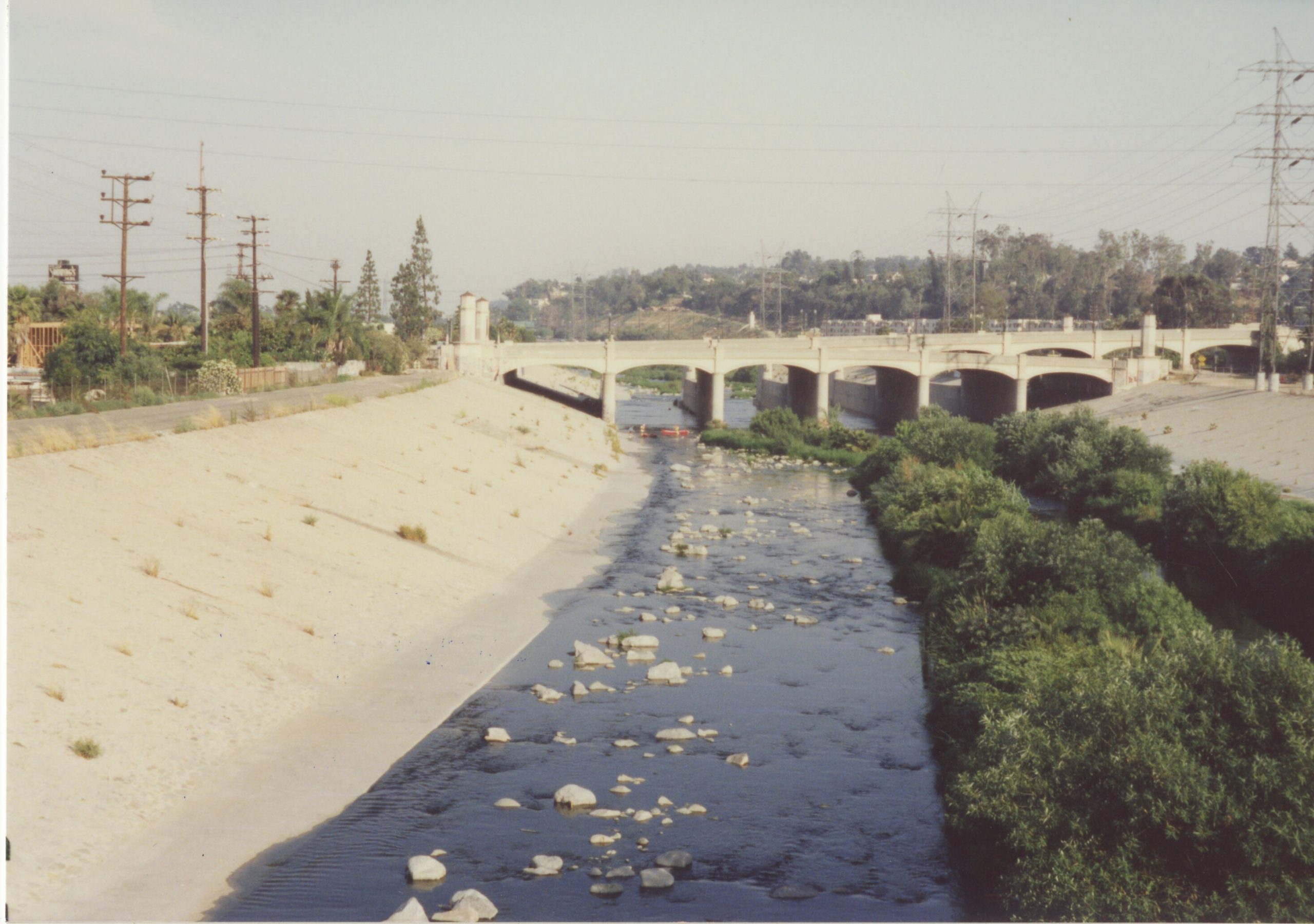
The Friends of the Los Angeles River (FoLAR) is a non-profit, urban environmental organization, founded in 1986, that is focused on saving, restoring and reviving the Los Angeles River. The Los Angeles River is 52 miles long, extending from Canoga Park in the northwest section of the San Fernando Valley to San Pedro Bay, the site of the Port of Long Beach and the adjoining Port of Los Angeles. The Los Angeles River drains most of the Santa Susanna, Santa Monica and San Gabriel Mountains. FoLAR — with a board of directors, a technical advisory board and a program that encompasses education, community organization and political action — has advocated for an integrated 52-mile greenway and has stressed the need to address the 30 different governmental agencies that have each had some jurisdiction over the river.
The City of Los Angeles was founded along the Los Angeles River in 1777. Until the completion of the Los Angeles Aqueduct in 1913, the river was the city's primary water source. Catastrophic floods in 1934 and 1938 precipitated the concrete channelization of the Los Angeles River by the United States Army Corps of Engineers, a major infrastructure project that spanned over 20 years and transformed the river into a single-purpose stormwater drainage and flood-control channel. At one point, 17,000 workers were paving the river by hand, constituting an important jobs-creation program during the waning years of the Great Depression.
The entire drainage area of the Los Angeles Basin and its surrounding mountains had been reengineered to accommodate Los Angeles's urban growth. As a result of the construction of the aqueducts — providing a reliable water source for Los Angeles, the channelization of the river and the elimination and taming of its many small tributaries — the process of urbanization accelerated. This efficient, single-purpose system for carrying away stormwater runoff meant that groundwater was no longer being replenished. Even during prolonged droughts, Los Angeles can experience intense rainfall over short periods without being able to capture any of the water for its own future use. Following its successful channelization and due to its efficiency as a flood-control system, the Los Angeles River received toxins and trash flushed into it from adjoining neighborhoods.
The Los Angeles River, with its sole function as a flood-control channel to whisk stormwater runoff to San Pedro Bay as quickly and efficiently as possible, became a worldwide symbol of the negative impacts of urbanization on the natural environment. With the fewest acres of parkland per capita in the United States, Los Angeles and its river were the poster children for failed environmental stewardship. The river was known for its graffiti, its homeless encampments and as the site of several Hollywood movies. A perceptual shift began in 1985, when the newly constructed Donald C. Tillman Water Reclamation Plant began discharging water from its Van Nuys site in the San Fernando Valley. The plant was designed to treat 40 million gallons of wastewater per day, and the Los Angeles River began to resemble a year-round river, with flourishing populations of birds, fish and crayfish.
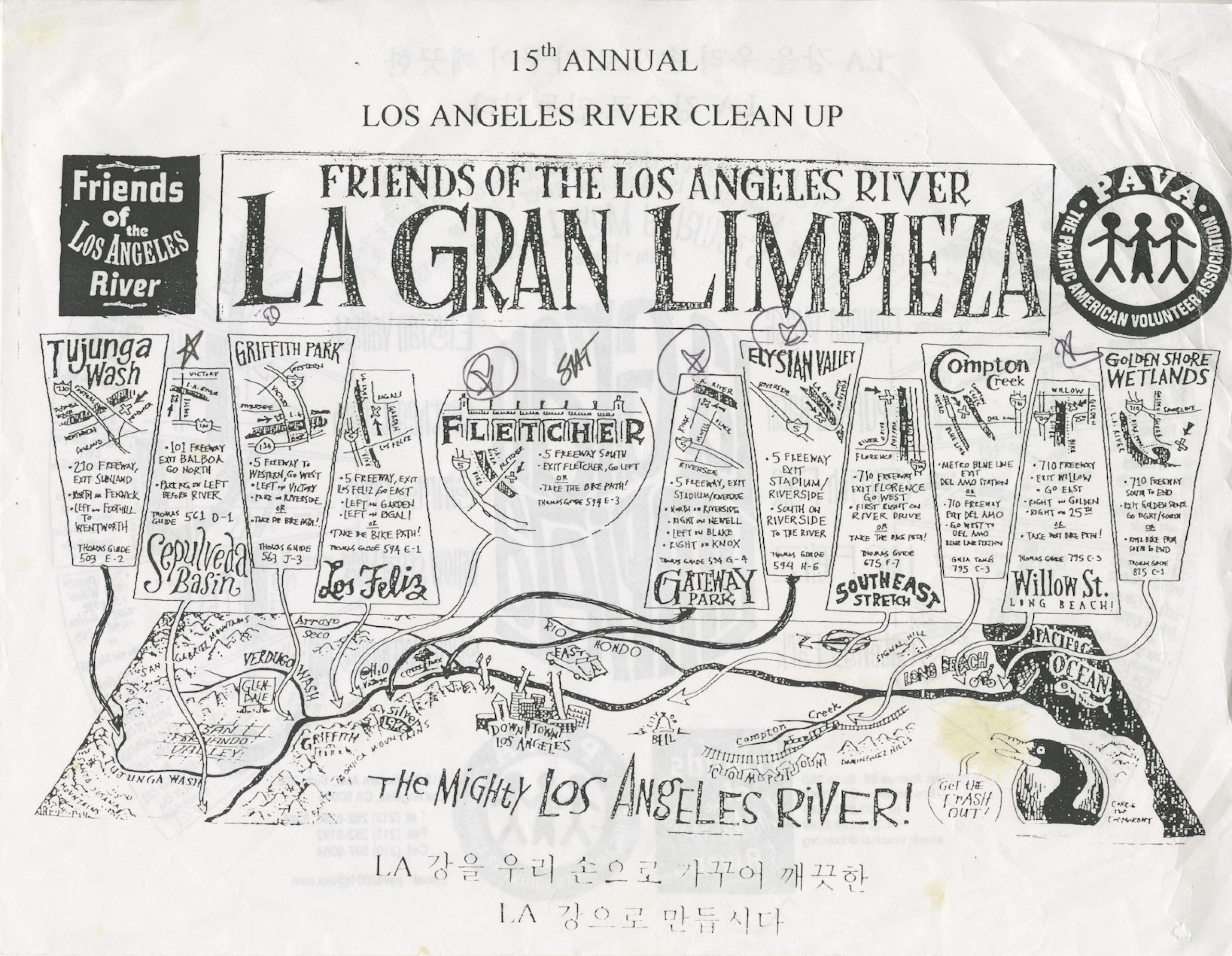
The mission of the Friends of the Los Angeles River (FoLAR) is to advocate for the Los Angeles River through education, collaboration and imagination. Among its goals are the restoration of the river's natural habitat through the application of flood-protection technologies that include reforesting and re-vegetating the river's watershed to control seasonal flooding and debris flow; encouraging the use of reclaimed water for irrigation and recharge of aquifers to promote sustainable development; the creation of bikeways, pedestrian paths, and horse trails on the riverbanks; promoting recreational use of the river, such as canoeing and kayaking; placing the Los Angeles River bridge on the National Historic Registry; and, in collaboration with other groups and agencies, activities such as community-based river clean-ups, graffiti removal, educational programs and water monitoring.
Services & Resources
- default
Los Angeles History and Culture in Library Special Collections
Library Special Collections holdings include a wide range of materials related to the history of the Los Angeles area and its communities. - default
Urban Planning Research Guide
A guide to research in the field of urban planning, including suggested databases, books, government agencies, statistics and more.