More Information
The Tule Lake Japanese Language Library Collection
Tucked away at the Systemwide Library Facility - South (SLF-S), located at UCLA, is a collection of nearly 2,000 volumes. These materials were found among acquisitions from The Japanese Language School Unified System, established in 1911, as well as individual books that came through personal donations to the Richard E. Rudolph East Asian Library from Japanese Americans who were incarcerated at the Tule Lake Relocation Center during World War II.
It wasn’t until recently that these books were rediscovered as part of the Tule Lake Japanese Language Library, based on library labels, call numbering systems and checkout cards with signatures.
From Discovery to Treatment
Kim Mc Nelly, former East Asian Library project manager and current assistant director for the Center for Buddhist Studies, brought these books to the attention of the Preservation & Conservation Department in July of 2024 while working on a partial digitization project of Tule Lake materials(opens in a new tab), now accessible via the UCLA Digital Library.
In the process of examining the collection, Kim flagged books with a range of condition issues associated with the historic repairs and overall poor quality of materials used in book production, and contacted our team for triage repairs at SLF-S. Issues included lifting cloth tape on spines, broken hinges or joints barely holding book covers together, detached or torn book pockets, and failing pressure-sensitive adhesive tape used to mend tears and losses.
Some books needed to be sent to the Preservation & Conservation Lab for more in-depth treatments. Four are highlighted below.
Improvised Book Repairs at Tule Lake
As one might imagine, these books can tell quite the story. Many came to Tule Lake as personal possessions brought in by incarcerated Japanese Americans. Given the restrictions on what could be brought into the camps, these books would have been invaluable to the communities formed there.
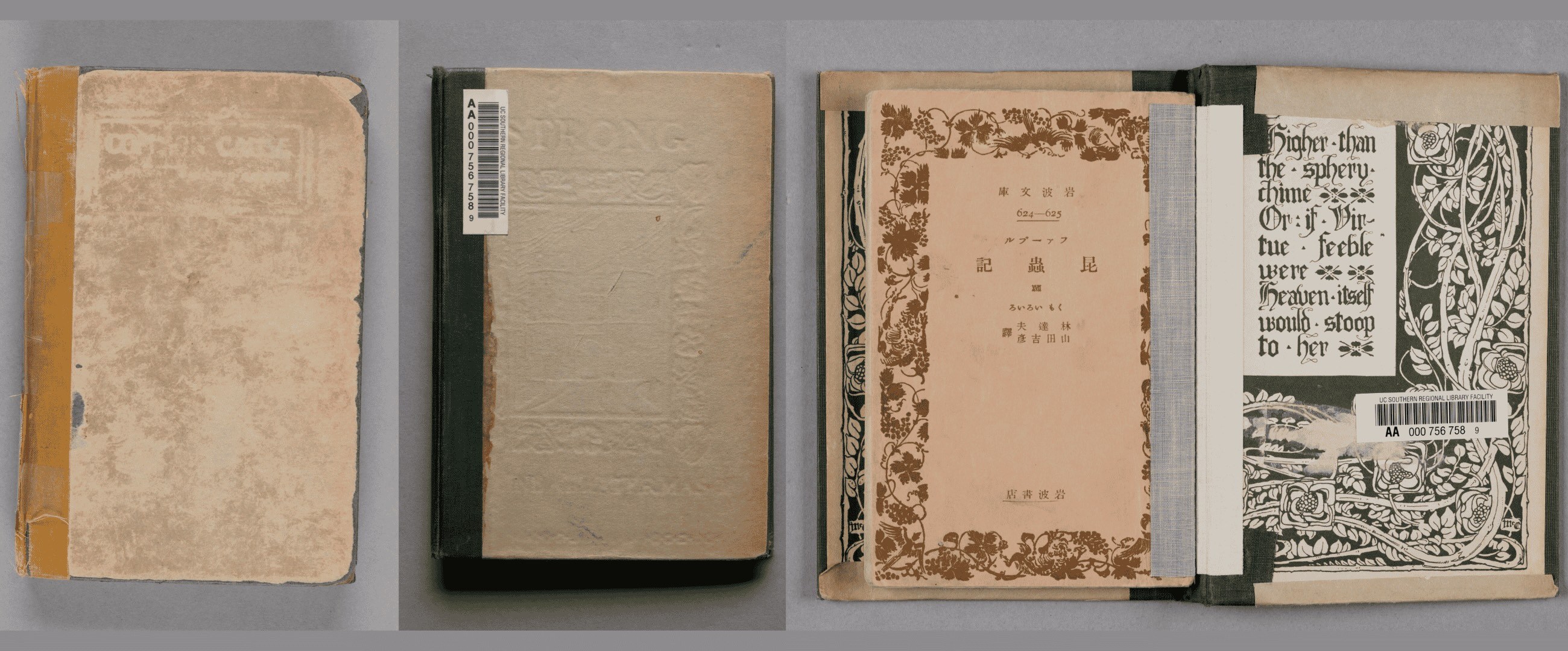
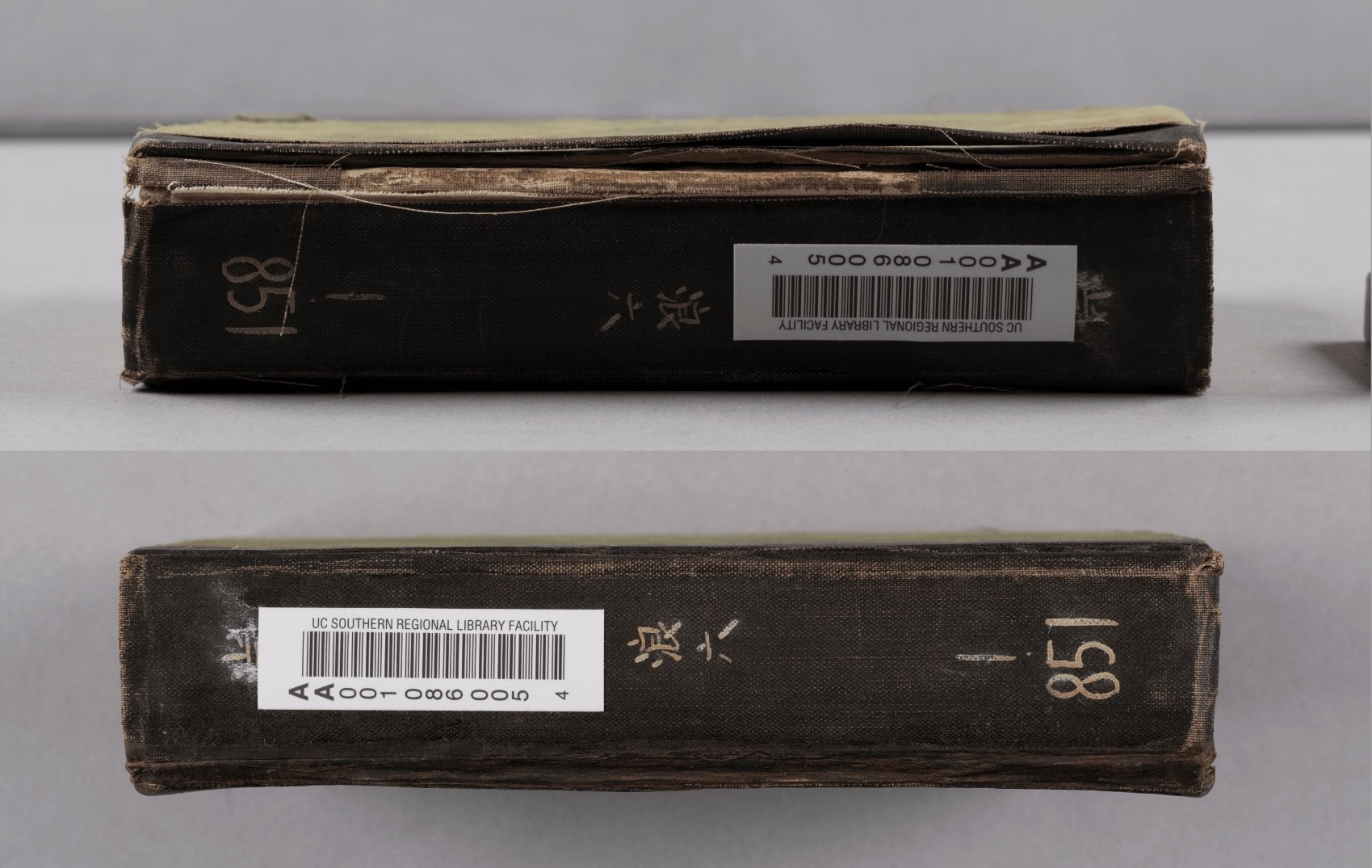
Many of the books were rebound at the Tule Lake Library using available materials. Many covers were repurposed from discarded volumes from the Klamath Falls public library system, which would have been the geographically closest public library to Tule Lake. Others had stamps from other library systems or original covers that were repaired and sometimes repurposed for different books.
The discarded covers, considered non-recyclable for World War II paper drives, were wrapped with plain paper likely glued with a starch paste to cover the original English titles. This technique was an ingenious use of unwanted materials under conditions of scarcity.
Cloth tape was used to recreate spines with handwritten titles and call numbers added to complete the covers. This tape may have been an early version sold by Demco®.
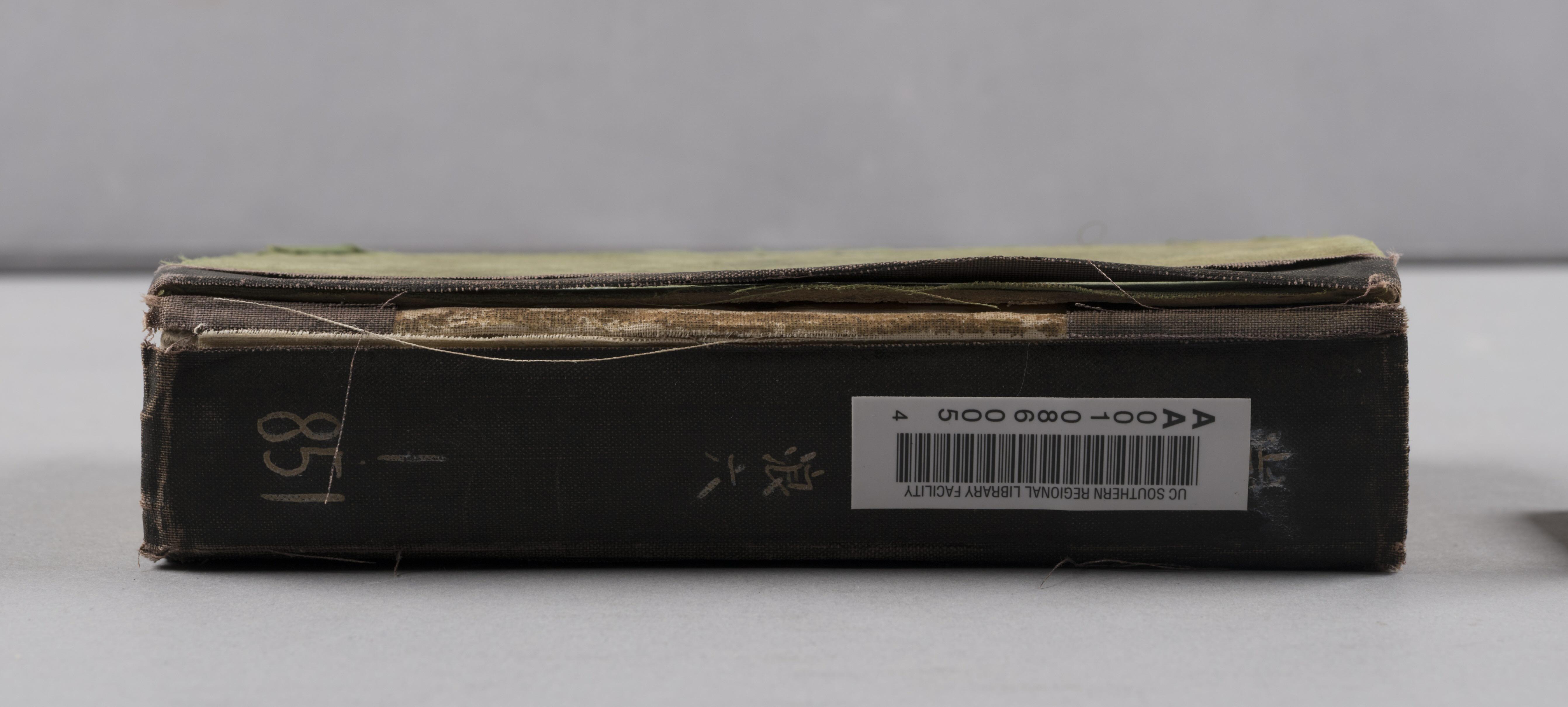
Founded in 1905 as part of the Democrat Printing Co., Demco® was purchased in 1931 by Norman D. "Smiley” Bassett and grew into one of the top suppliers of library materials in the United States. Vinyl-coated cloth tape is still used by libraries today, although updated with different adhesives, pigments/dyes and coatings than the kinds found in the first half of the 20th century.
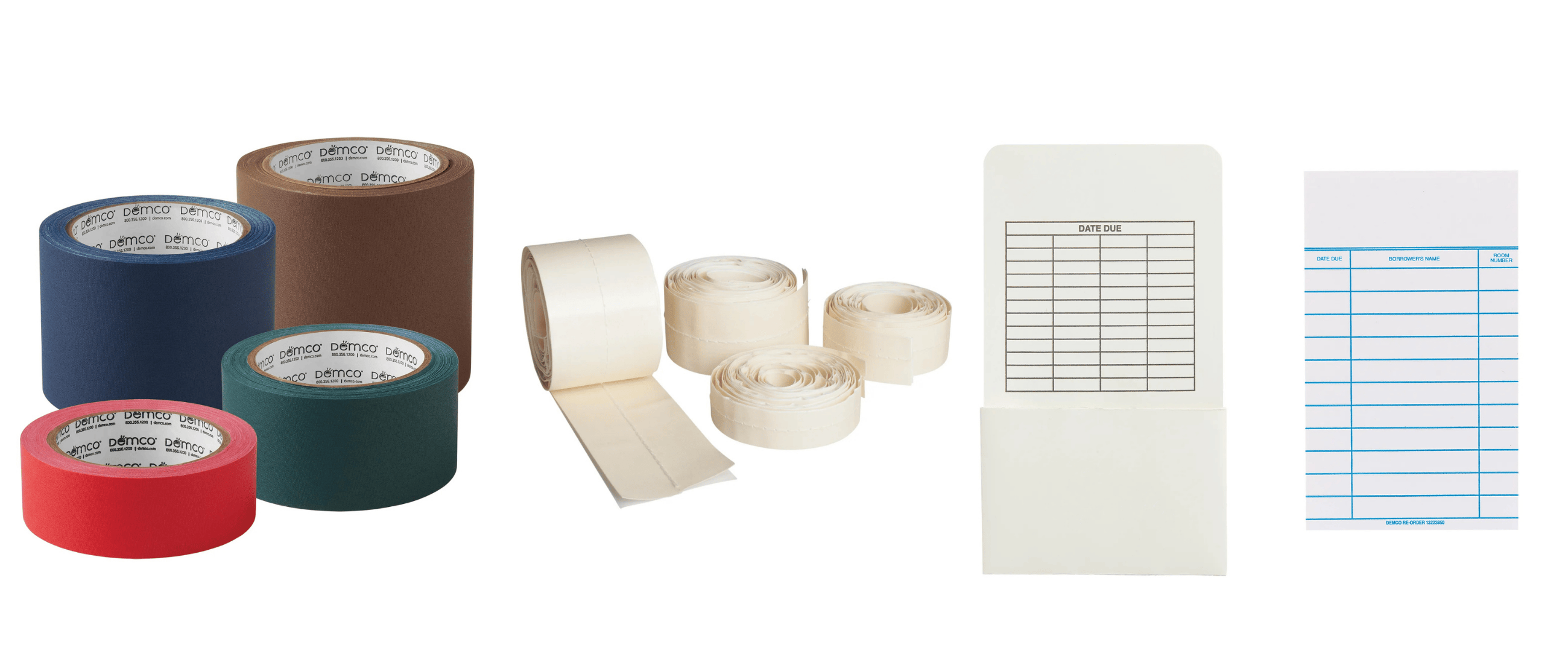
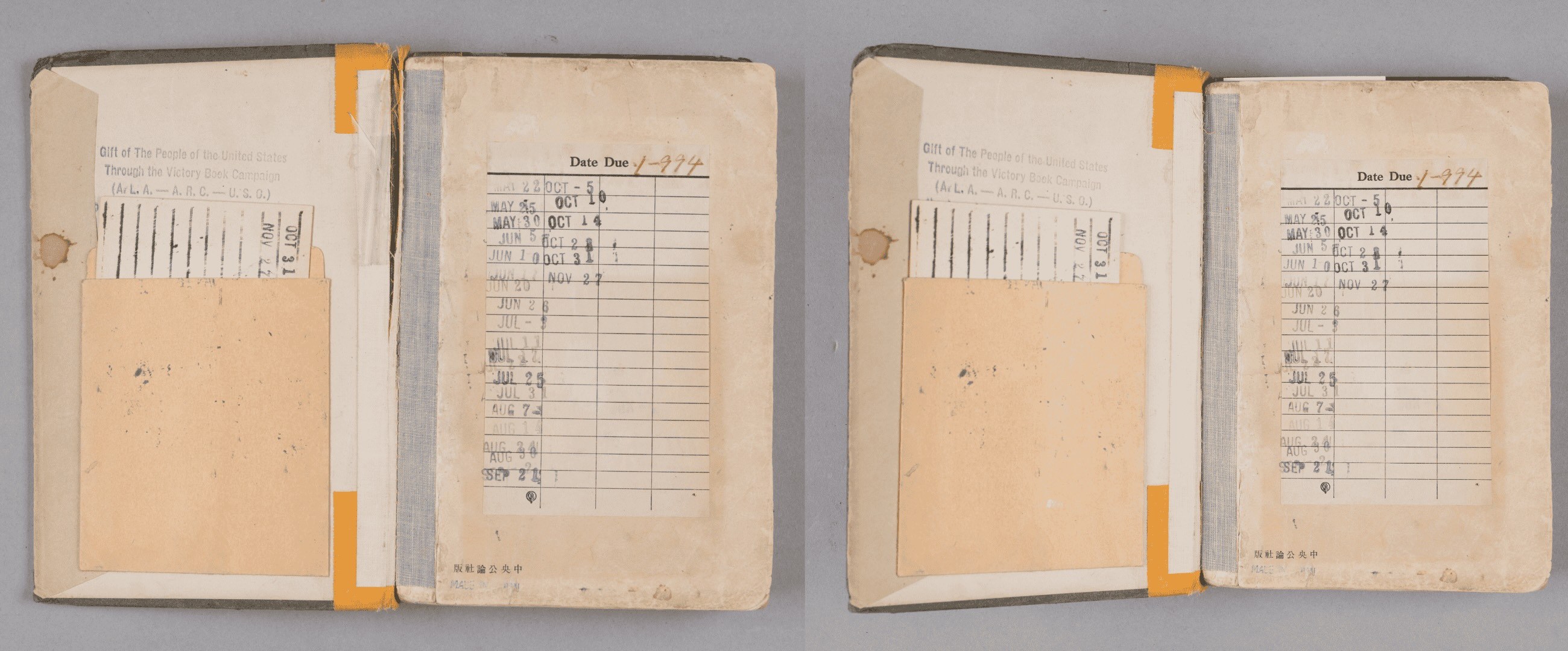
In addition to this spine repair tape, books with repurposed or detached covers often included double- and single-stitched binder tape used to reattach the text block to the covers. This repair uses a spool of repair tape consisting of a specific thickness for the spine attachment and one or two sides sewn flanges that are adhered to the fly leaf of the text block and then to the board pastedown, recreating the inner hinge and closing the exposed spine.
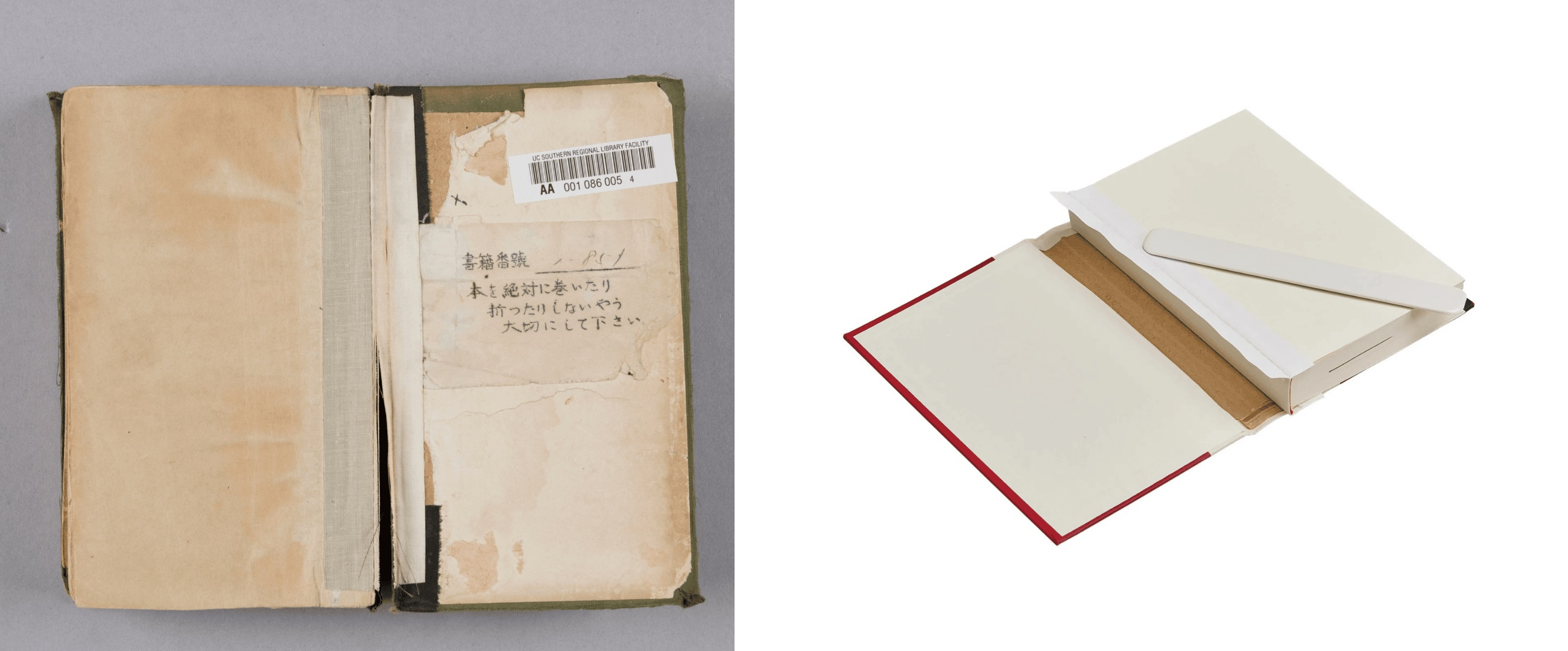
For especially important texts, an additional paper cover was used to protect the original Japanese text cover from the gummed adhesive of the binder tape.
Other prefabricated items used in the collection include book pockets, due date slips and checkout cards, although not all volumes retain them. Uniquely, the books from Tule Lake also include a note from the library to handle with care. Together, these elements supported a functioning library, helping to ensure minimal damage and return of collection items to the library in one piece.
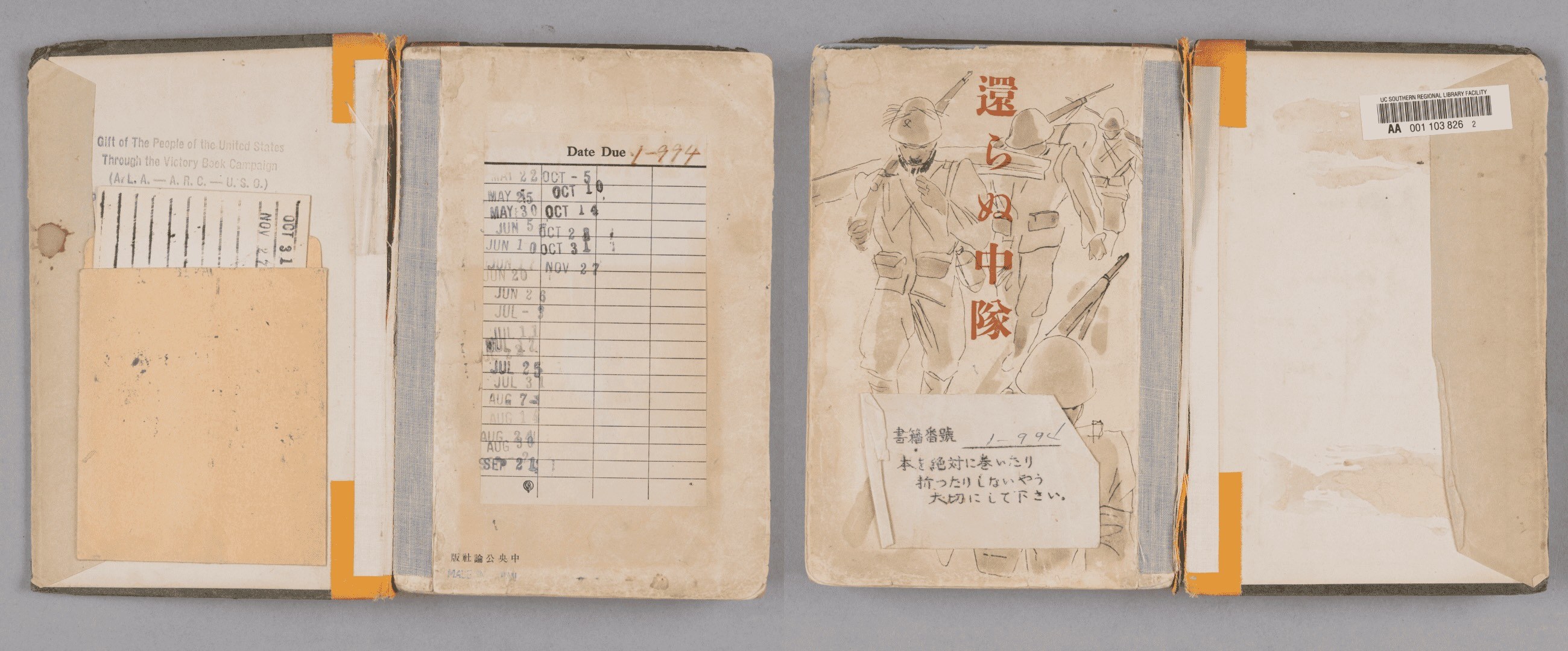
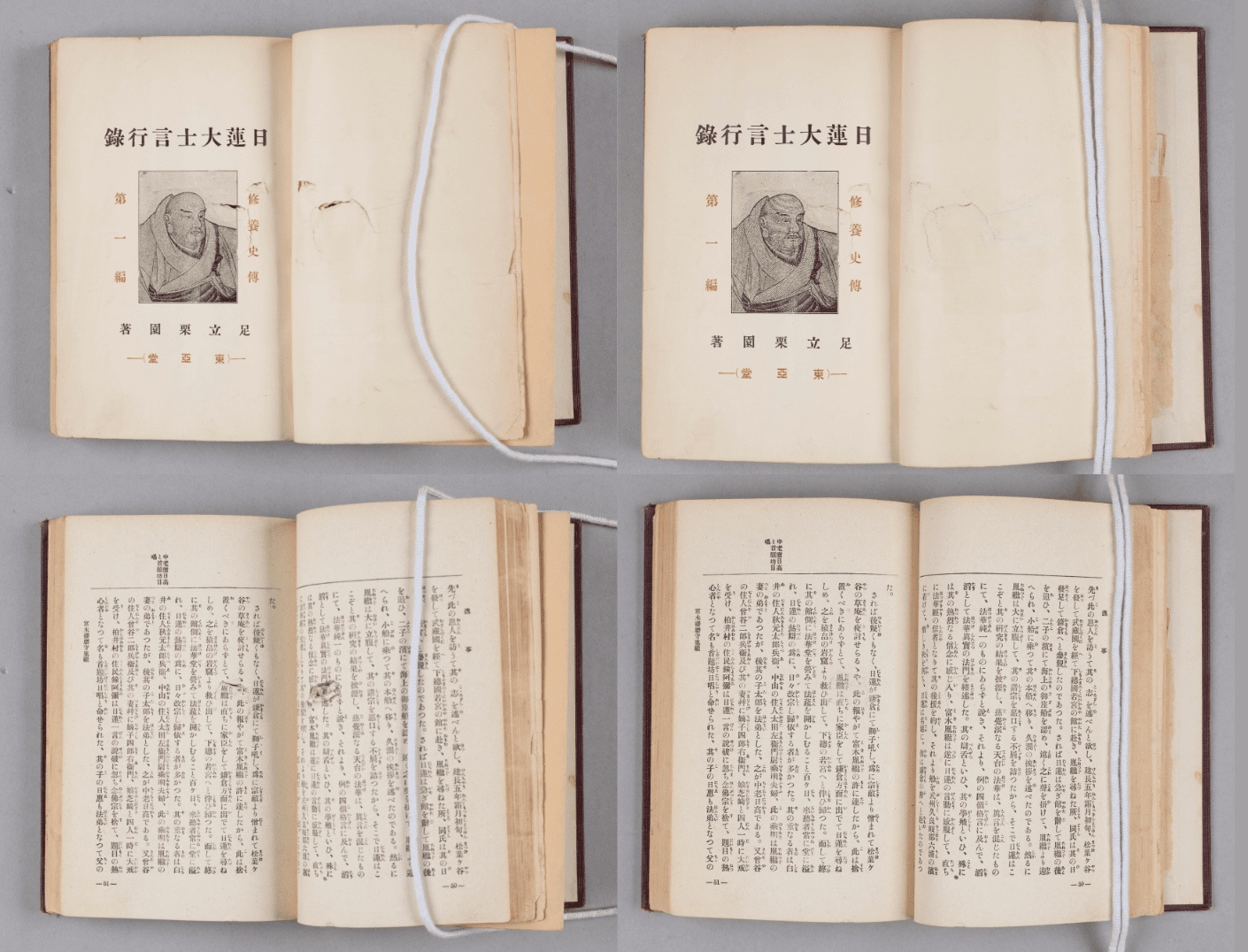
It is common to see rubber-based pressure-sensitive adhesive tape throughout the books in this collection. Tape was heavily used for mending tears in pages and has since discolored the paper. In some cases, the adhesive from the tape has caused pages to stick together, posing challenges to access. Because there are so many pages with tape throughout the collection, it is not feasible to remove all of it at this time. However, as the adhesive continues to degrade and dry out, the tape carriers eventually detach, allowing for the pages to be accessed again more safely.
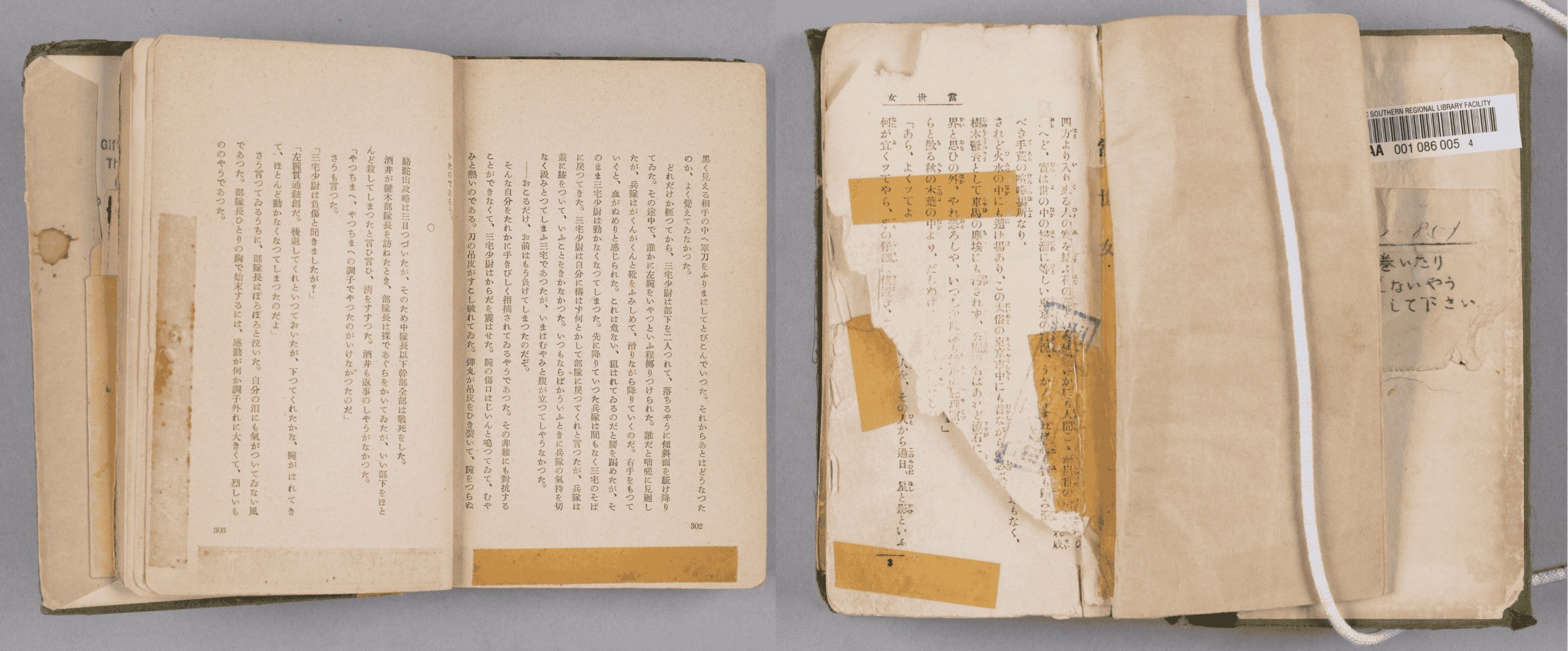
I plan to revisit these books in the coming years to see how the adhesive degradation progresses and how my repairs are holding up, and will then treat accordingly.
Once treatment is completed, the more fragile books will be housed in archival enclosures to reduce the possibility for further damage.
Conservation Approach and Treatment Process
While these materials used to repair books at Tule Lake were meant to give a book a second life, they were also meant to be replaced over time, whether it was with new repair tapes or a new binding. However, because the Tule Lake Japanese Language Library Collection is so unique, the repairs done while they were in circulation are now seen as evidence of care as well as part of each book’s provenance.
Rather than removing these repairs, I focused on stabilizing them with minimal change to their appearance while improving the overall handleability.
In treating these volumes, I used a mixture of wheat starch paste and methylcellulose to adhere toned Japanese paper mends underneath lifting spine tape and binder tape hinges, reattach lifting binder tape flanges and repair tears in the text block and reinforce areas with failing tape.
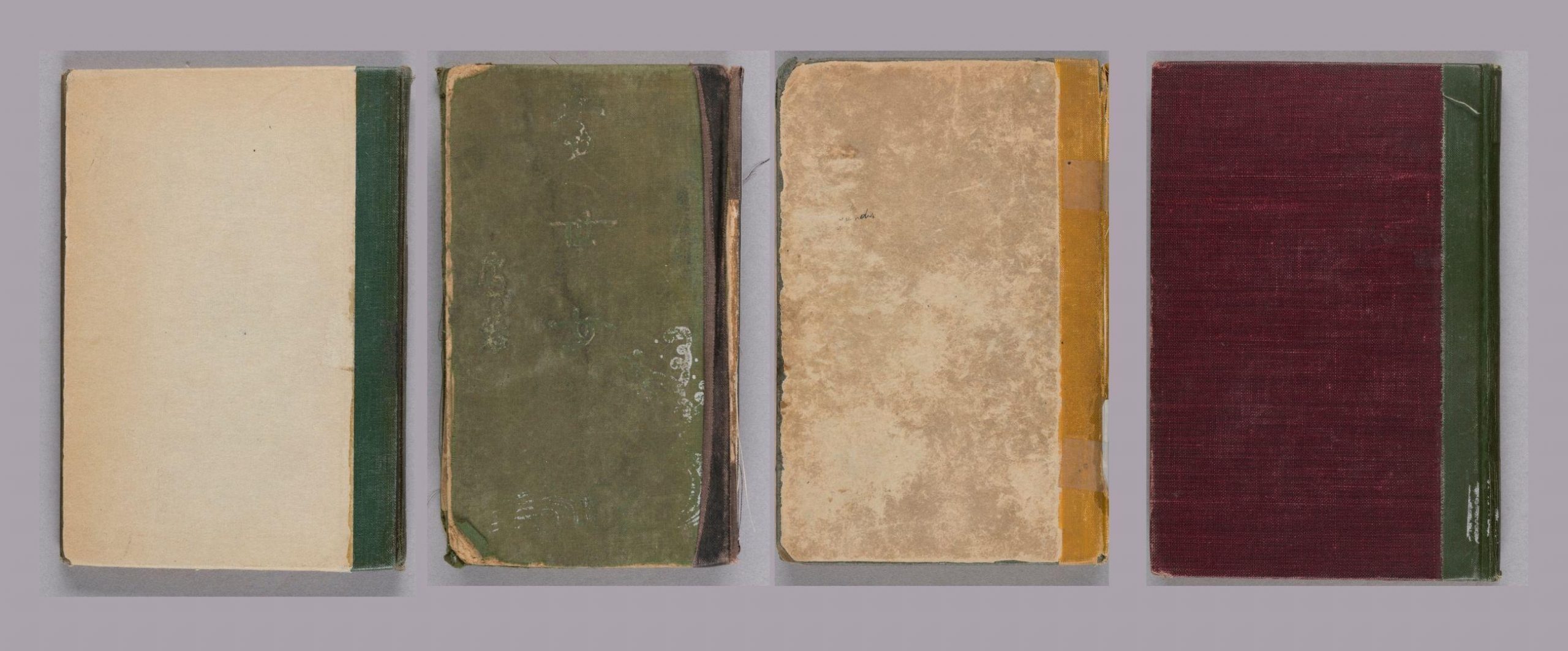
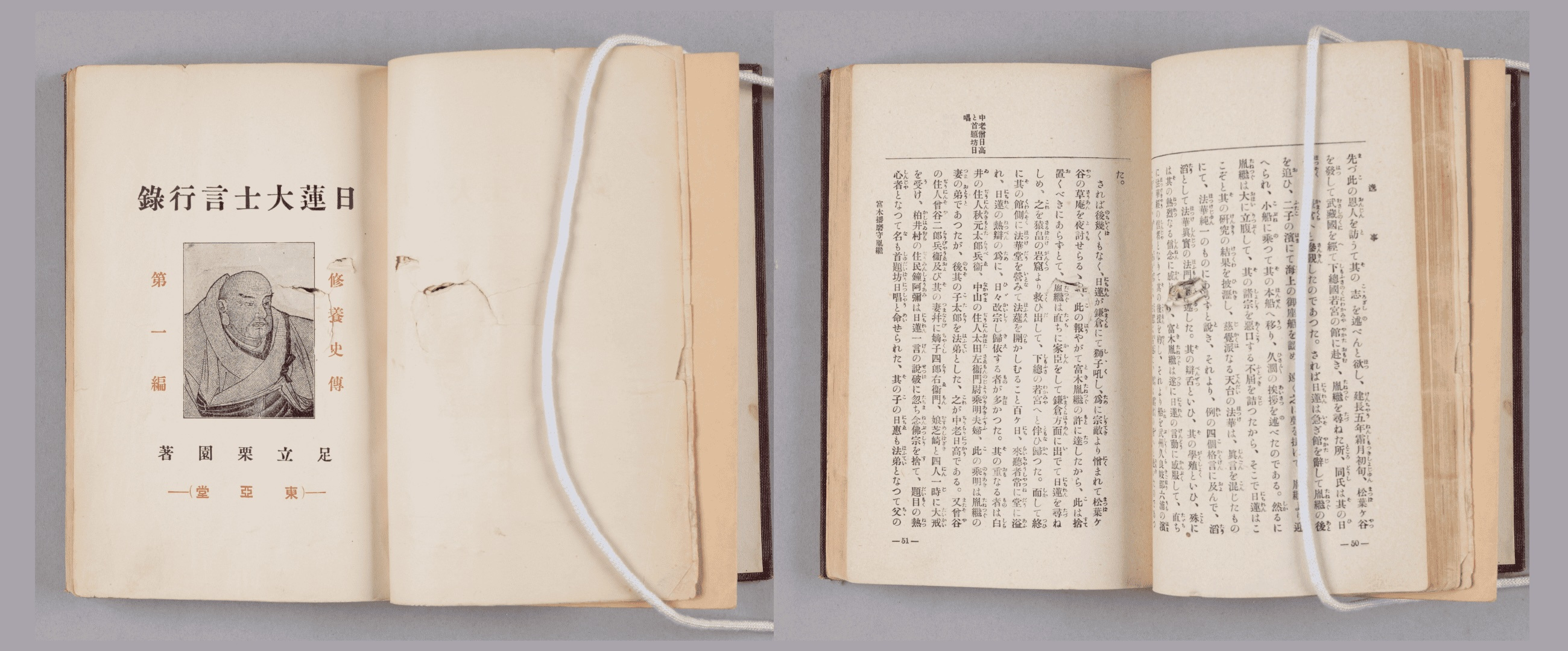
Below are before and after images of the four books highlighted in this article.
Access the Collection
This is a non-circulating collection. Researchers can locate materials through UC Library Search and can request access through the Charles E. Young Research Library (YRL) circulation desk, with materials paged for review in the East Asian Library Reading Room.
- Use UC Search to find the specific titles from the collection.
- Send an email to the YRL Circ Desk yrl-circ@library.ucla.edu with a request to page the specific items with the barcode information and copy it to the EAL Japanese Librarian tbialock@library.ucla.edu to reserve the reading room with the specific dates.
- You will be notified by the EAL Librarian when the requested items are available to access in the EAL Reading Room (it takes approximately two days to process requests).
Resources and Further Reading
World War II Paper Drives
Make It Do: Scrap Drives in World War II | Sarah Sundin(opens in a new tab)
Demco®
Demco History | Library Technology Guides(opens in a new tab)


