More Information
In recognition of Preservation Week(opens in a new tab) (April 26–May 2, 2026), UCLA Library Preservation & Conservation staff are sharing a closer look at how they monitor and identify common collection pests. Integrated Pest Management (IPM) plays a key role in protecting library collections by preventing pest-related damage.
Common Collection Pests
Our Preservation & Conservation team has been collecting specimens to build a reference of known collection eaters and other common campus pests for staff training and support identification when pests are found in the Library. A key component of this work is understanding which ones pose the most risk, recognizing the tell-tale signs they leave behind, and determining what is new or recent damage. By building awareness, our staff can respond more quickly and effectively to the issues pests bring.
After all, we want our collections to be devoured by library users, not by uninvited guests!
Silverfish
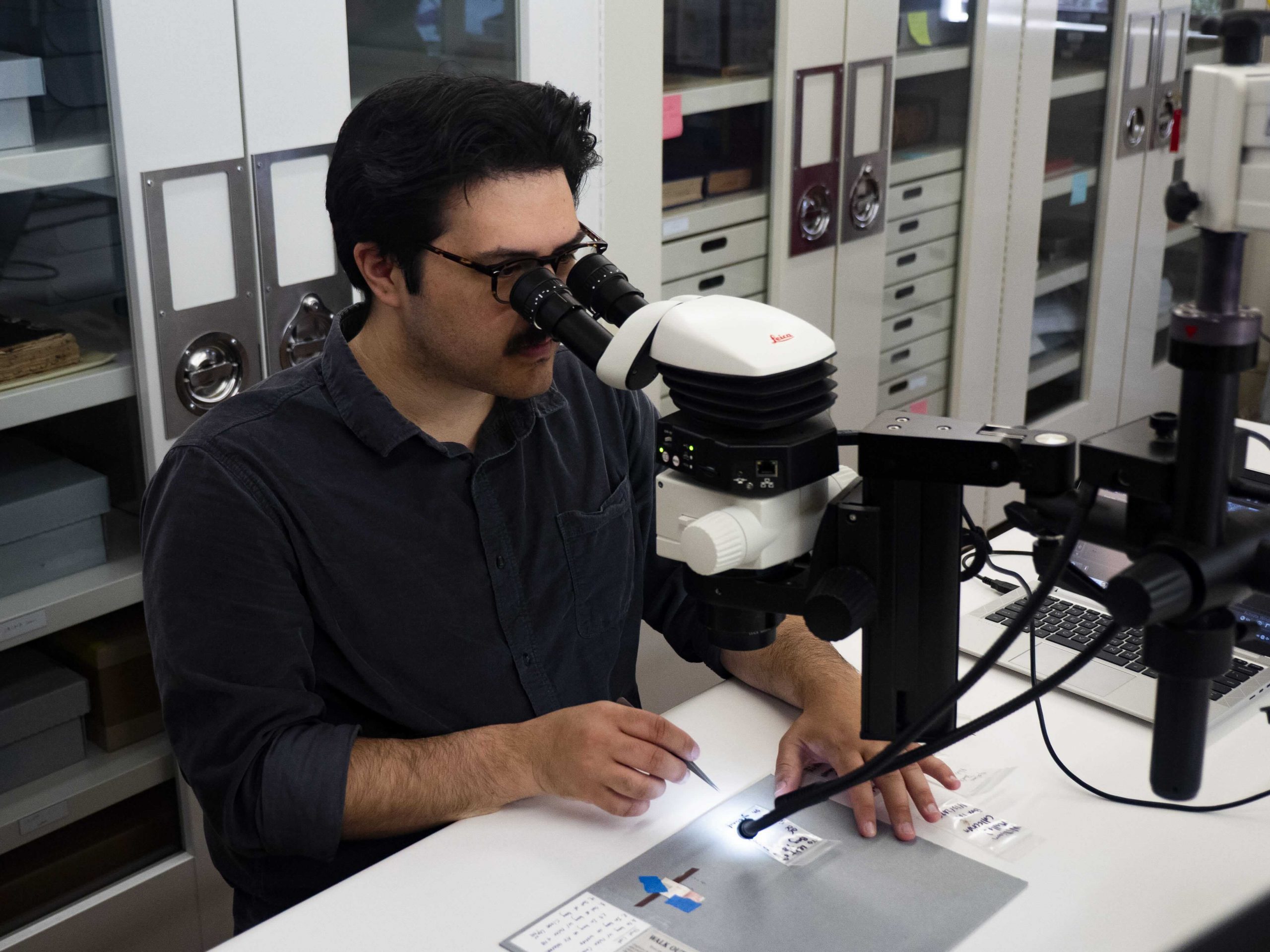
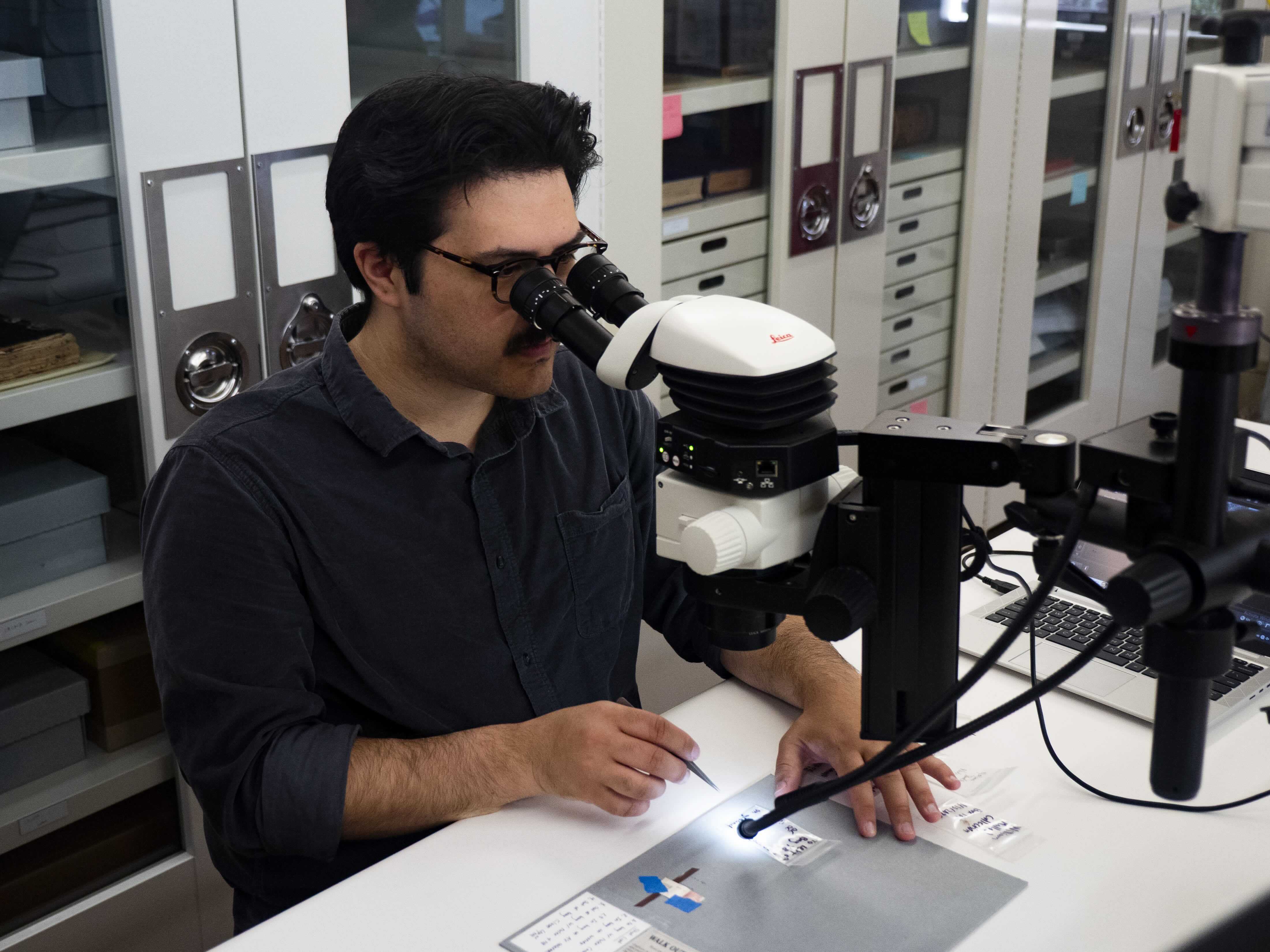
This insect grazes over the surface to feed, so we were attempting to capture closer images of its mouth. Silverfish are effectively mini-adults and ready to eat starches when they hatch and, under the right conditions, can live up to 8 years!
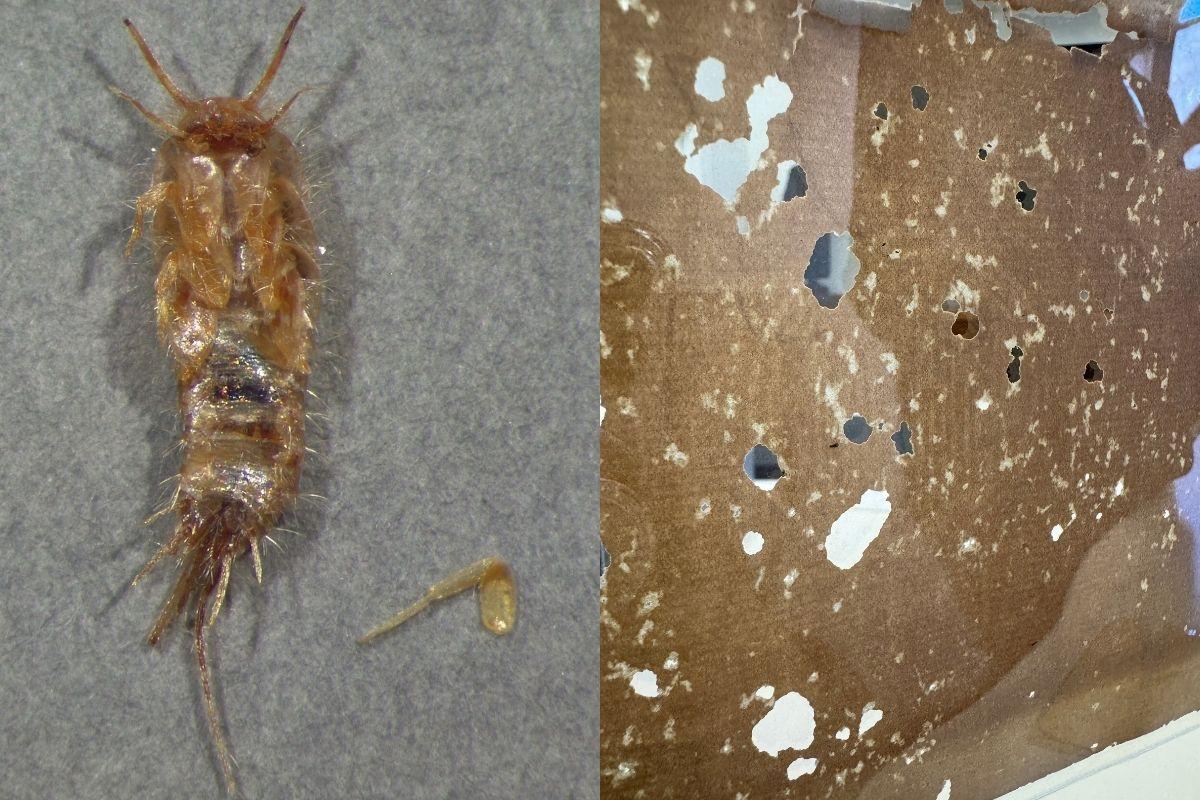
Silverfish damage is characterized by paper thinning, as they eat the surface in shallow layers.
Carpet beetles
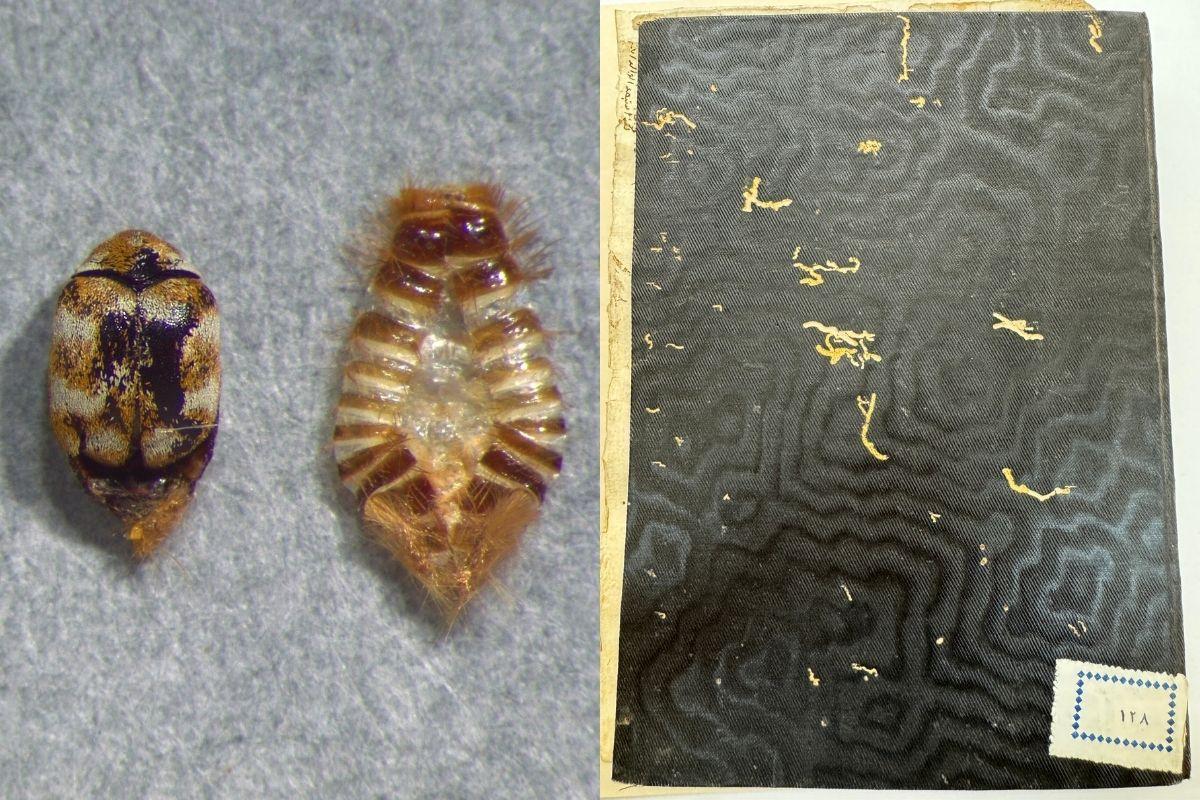
“Bookworms” are actually damage caused by beetle larvae. These are often perfect circular holes that run straight through a book.
The left beetle is an adult carpet beetle; the right side is the
discarded larval skin. The larvae are the ones that are attracted to
collections made from animal-based glues, leather, silk and wool.
Webbing clothes moth
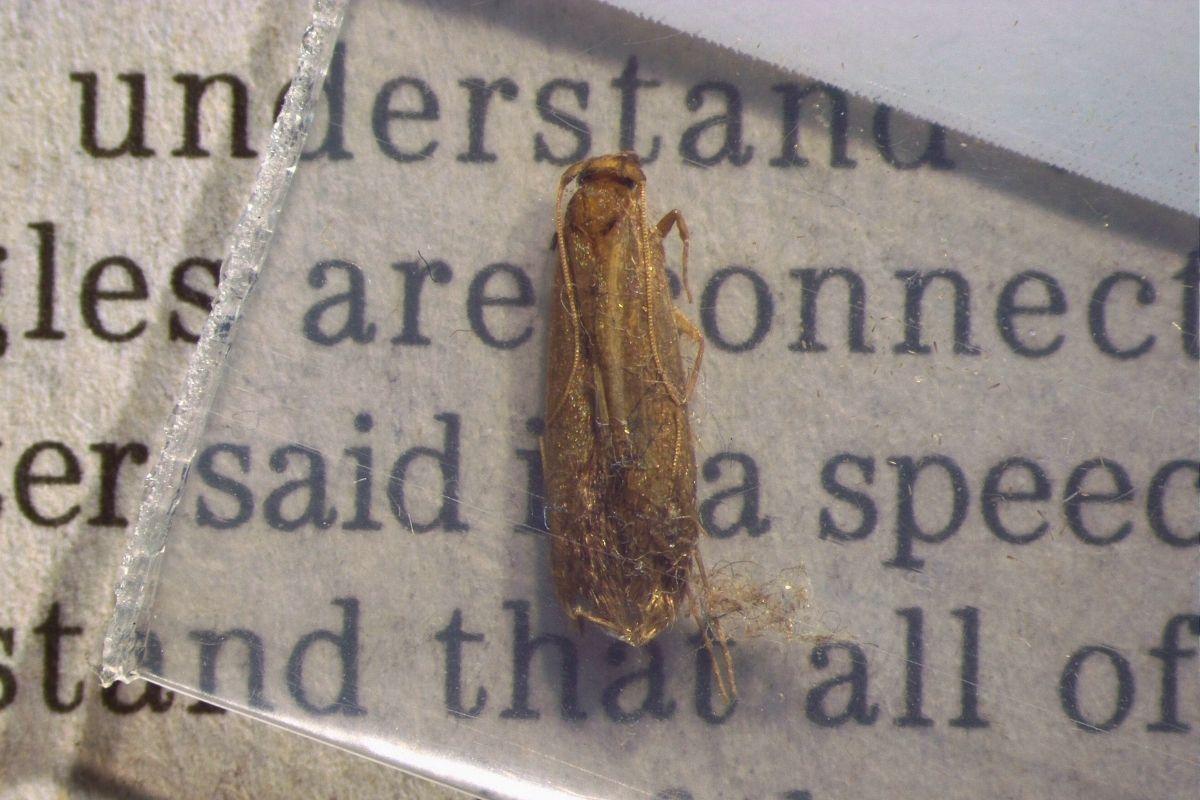
This is an example of a webbing clothes moth. If you see an adult
moth, it isn't the one eating the collection but may have laid eggs near a food source. It’s their larvae who eat proteins, just like the beetles.
Resources
If you see any of these or other pests in your home, consult resources like the University of California Statewide IPM Program (opens in a new tab) or the LA County Department of Public Health pest resources to identify and learn how to manage the situation.